

We’ve seen countless blogs, articles, and studies over the last few years about how work is a massive part of our daily lives—especially those of us who closely follow HR trends, work-life balance, and corporate policies. Every single hour is meticulously tracked and broken down: who spends what amount of time where, the challenges we face, and how it all impacts our mental health and productivity. We actively analyze these results, trying to put them to good use, discussing new strategies and approaches with our most serious professional faces.
All of this is incredibly important, of course. But today’s blog isn't about the HR professionals shaping these trends, nor is it a history lesson. I’m not here to talk about the Industrial Revolution's mass employment, or how World War II pushed women into the workforce, sparking a powerful movement for self-realization and equal rights. I’m not even focusing on the "fathers of capitalism" who eventually crunched the numbers and realized that investing in working parents yields a much higher return, nor on modern companies that take this century-and-a-half-long evolution for granted.
This blog is about the children who "share" their parents with work. Children like me, who used to say goodbye (and still do) to their parents every single day as they watched them head off into what felt like a mystical space.
Being the child of working parents, my memories are a bit of a blur. I can't quite tell what was bigger: the deficit of hours spent with my parents, the agonizing weekend anticipation of them arriving at our summer holiday spot, or my sheer curiosity about what actually happened in that mystical, magical world they stepped into every day. To me, this whole process was the ultimate sign of adulthood. My fascination with my parents' jobs was huge—whether it was my dad unpacking his multi-pocket backpack and boots to go out "into the fieldwork," or my mom digging through books to prepare for her lecture the next day.
I was about four years old when my mom invited me to come to work with her. It remains one of my most vivid and cherished memories, and it made my perception of the working world even more magical. I remember exactly how the space was set up in her university department. Just like many other workplaces in 1990s Tbilisi, the aroma of Turkish coffee filled the air. There were coworkers who, to my surprise, knew me quite well, tons of stationery I could play with, a mini-tour of a few lecture halls, and my mom—who was in a completely different role in that environment (though I loved her in that role too).
I don’t know if it’s because the workforce was eventually joined by children like me—armed with these magical childhood experiences and a "constant longing for our parents"—or if it was just down to environmental factors, but as I grew up, I started hearing about all sorts of interesting initiatives and strategies. Companies were changing their approaches and introducing quite creative practices to support employees' children and families. Even before I joined the ranks of HR professionals, I would notice these experiences (including in movies and TV shows) and enthusiastically wait to land in a work environment that would give me the chance to bring this to life.
In 2019, I joined Omedia, ready for a new HR adventure. During my very first meetings with the management team, I realized I was pretty much in HR heaven. The company's values and attitude gave me a massive window of opportunity to implement employee-centric policies, activities, and just experiment with a lot of things. This included doing things for the children, who, just like I used to, looked at their parents' jobs with a mix of excitement and a little bit of sadness. (Tech companies, starting from the 90s, have made major shifts in establishing family-oriented policies, so there were already plenty of best practices to lean on).
However, every opportunity comes with its own challenges and limits. Despite my huge enthusiasm and desire, rolling out a massive, formal policy or strategy didn’t really make sense at the time—simply because, at that moment, Omedia only had two children. So, what could I do? I temporarily shelved my grand HR fantasies, and our care and goodwill came down to this: one Omedia child would confidently walk into our office after kindergarten, while the other actively rolled up their sleeves to help us make decorations and dive into the fun at our very first Halloween party.
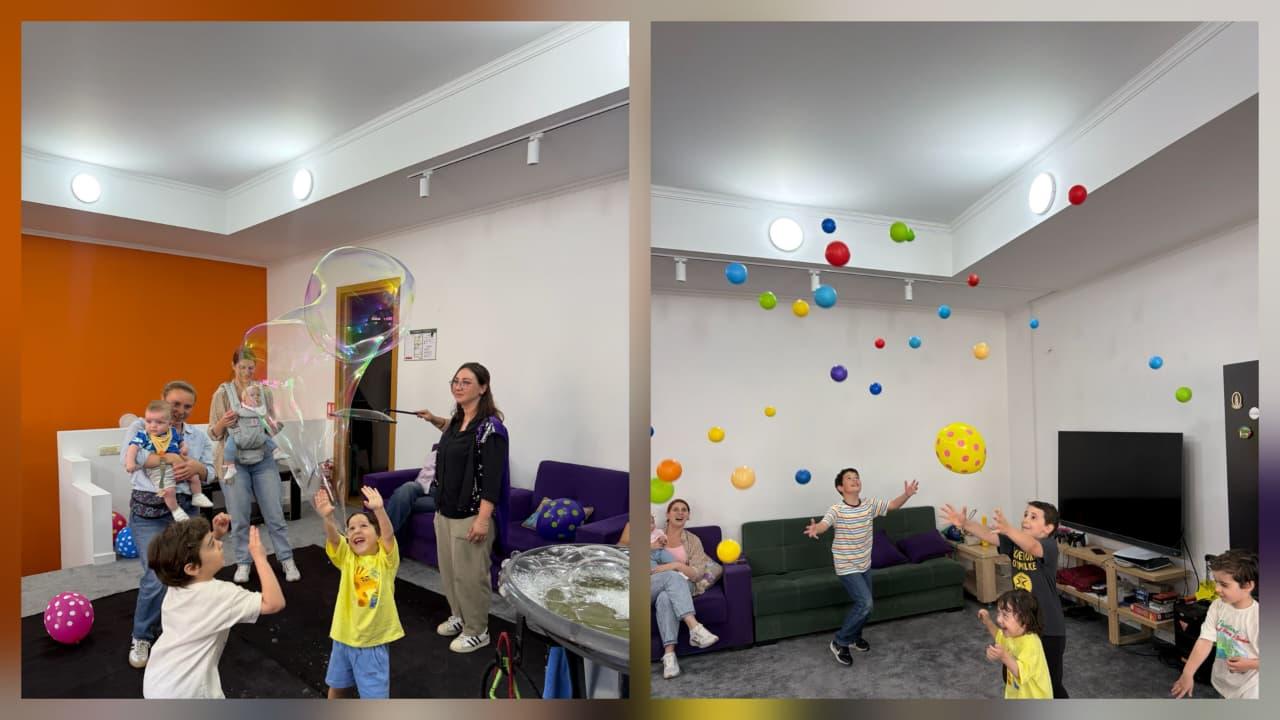
As time went on, our challenge turned out to be "fixable." I'll admit, these policies and approaches are still very much in the shaping phase. Even today, you can easily count Omedia's children on your fingers, but our team is still striving to create a supportive environment for this new generation of working parents' kids. Opening Omedia's doors to Omedia's children for International Children's Day on June 1st has already become “a tradition”. Alongside lines of code popping up on laptops, Slack notifications, and employees wearing headphones on calls, the office fills with animators, puppet theaters, and bubble shows. Omedia's children get a peek into their parents' mystical work environment; they don’t have to wait for the weekend during school holidays to be close to them, they get to benefit from hybrid work flexibility, and they are already on our "target list" for future activities right from the onboarding process.
Slowly but surely, my HR fantasies are unfolding again, and our family-oriented policy is taking a much more concrete shape. This year's event was incredibly special for me because, besides being the organizer, I was also a beneficiary. My own child saw my work environment for the first time, and over time, they will reap even more benefits from the values my company stands for.
Happy International Children's Day to the child of every working parent! I wish them a world where their parents have every opportunity for self-realization, and where family care policies are not just a "perk," but a standard reality. Perhaps their experiences, being closer to their parents' jobs, and the care they receive today will shape the future working culture, just as the quirky and contradictory experiences of my generation shaped ours. In the meantime, our team is trying to stay completely open to these experiences, offering more tangible benefits to our working parents, as well as to those Omedians who aren't part of that group just yet. But well, we will talk more about all of that and the broader challenges of HR policies in the tech world in other blogs.